
Deciding between sod and seed for your new lawn in the Cincinnati area? Learn the pros and cons for Southwest Ohio's climate and clay soil. Call for an estimate.
Schedule a ConsultationCall (513) 509-3741Updated October 14, 2026

When establishing a new lawn in Northern Cincinnati, from Mason to Indian Hill, homeowners face a primary choice: install a ready-made sod lawn or cultivate one from seed. The best method depends on your timeline, budget, and the specific conditions of your property. Understanding the core differences is key to a successful, long-lasting lawn that can handle Southwest Ohio's heavy clay soils and variable seasons.
Sod offers the significant advantage of an instant lawn. It arrives as mature grass, providing immediate aesthetic appeal and crucial soil stabilization. This is especially important for newly graded sites or properties with slopes where erosion is a concern. Seeding, in contrast, is a process of growing a lawn from scratch. While it requires more patience and initial care, it is more economical and allows for a greater selection of grass varieties, enabling a custom blend perfectly suited to your yard's unique sun, shade, and traffic patterns.
At Melena Landscaping, we have provided expert sod installation and professional seeding services since 2012. Dan Melena, with industry experience since 2006, personally oversees every project to ensure your new lawn has the best possible foundation for long-term health. Below is a direct comparison to help you weigh your options.
| Feature | Sod Installation | Lawn Seeding |
|---|---|---|
| Establishment Time | Immediate green cover; usable in 2 to 4 weeks | Germinates in 7 to 21 days; takes a full season or more to mature |
| Best Planting Time | Anytime ground is not frozen (Spring/Fall ideal) | Late summer to early fall is optimal in Ohio |
| Upfront Cost | Higher initial investment | Lower initial investment |
| Weed Competition | Low; dense turf chokes out most new weeds | High; new grass must compete with weeds |
| Erosion Control | Excellent; provides immediate soil stabilization | Low; vulnerable to washout until established |
| Grass Variety | More limited to what local farms grow | Wide selection of species and custom blends |
| Initial Care | Requires heavy, frequent watering for first few weeks | Requires consistent, gentle watering and protection |
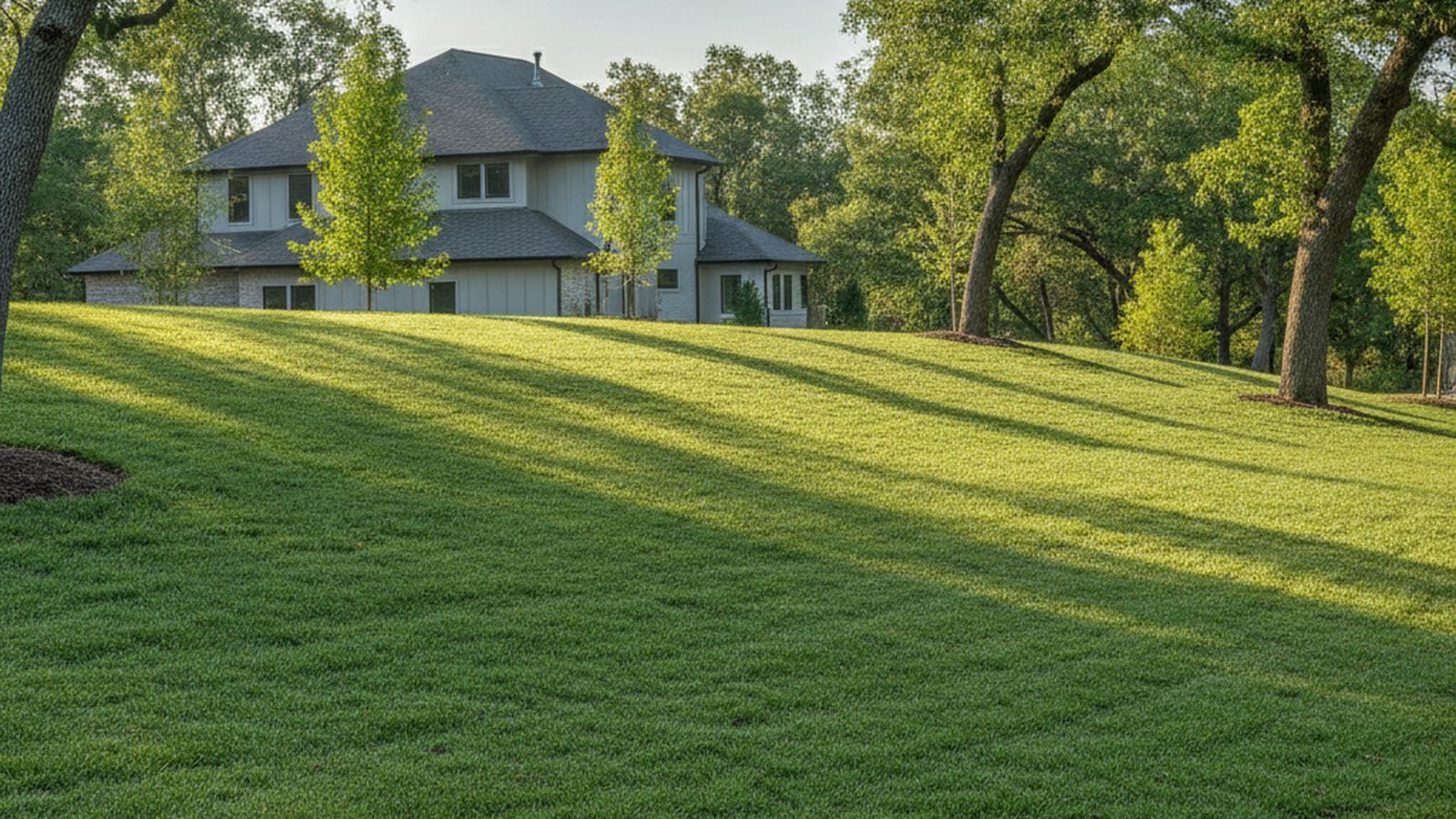
Opting for sod installation is often the best solution when immediate results and erosion control are top priorities. For new construction homes in Liberty Township or commercial properties in West Chester that need instant curb appeal, sod delivers a dense, green, and mature lawn from day one. This immediate transformation is a primary reason homeowners choose sod, but its practical benefits for our region are just as compelling.
Sod provides an immediate, robust cover that holds soil in place, preventing runoff during heavy spring and summer rains. This makes it the superior choice for any sloped areas of your property. A properly installed sod lawn acts like a blanket, protecting your topsoil and preventing messy washouts that can be common with new seed.
The team at Melena Landscaping, led by NDS-certified drainage specialist Dan Melena, ensures your property is perfectly graded and prepared before any sod is laid. This meticulous site preparation is vital for ensuring the long-term health and success of your new lawn, preventing common issues like poor drainage or uneven surfaces.

Seeding a new lawn is a classic approach that offers significant benefits, especially for homeowners who prioritize budget and variety. The most apparent advantage of seeding is its lower upfront cost compared to sod. For large properties in areas like Lebanon or Springboro, the cost savings can be substantial, making a beautiful lawn more accessible.
Beyond the cost, seeding provides a much broader selection of grass types. This allows you to create a custom-tailored lawn. You can select specific cultivars of cool-season grasses that are best suited for the unique conditions of your yard, such as heavily shaded spots, full sun areas, or high-traffic zones. This ability to customize can lead to a more resilient and successful lawn in the long run.
A lawn grown from seed establishes itself in its permanent environment from the very beginning. This can encourage the development of a deeper, stronger root system as the grass adapts to the specific soil and conditions of your property. Over time, this may result in a more drought-tolerant and robust turf. However, achieving this requires patience and proper care. This window allows the grass to germinate and establish strong roots in warm soil before the winter freeze, with less competition from weeds compared to spring seeding.
The main drawbacks of seeding are the long establishment time and vulnerability in the early stages. A new seedbed is susceptible to erosion from heavy rain and requires diligent, gentle watering to ensure germination. It can take a full growing season or more before the lawn is dense and mature enough for heavy use. Melena Landscaping provides professional seeding services that include essential soil preparation and amendments to give your new grass the best possible start.

Success with any new lawn in Southwest Ohio, whether sod or seed, depends on understanding our local environmental conditions. Our region has cold winters and warm, humid summers. These conditions are ideal for cool-season grasses, which see their most vigorous growth in the spring and fall.
Much of the soil in the Northern Cincinnati area is characterized by a high content of clay or silt. While fertile, these soils can be challenging. They compact easily, which restricts root growth, and they drain slowly, which can lead to standing water or root disease. For a new lawn, proper soil preparation is not just recommended, it is essential. At Melena Landscaping, our process always begins with a thorough site survey. As an NDS-certified drainage specialist, Dan Melena ensures proper grading and, if necessary, the incorporation of organic matter like compost to improve soil structure. This step helps break up heavy clay, improving both drainage and aeration to create a healthy foundation for root development.
Choosing the right grass is critical for long-term success. The species most recommended for Ohio lawns are Kentucky bluegrass, tall fescue, fine fescues, and perennial ryegrass. Often, a blend of these offers the best performance:

The cost of establishing a new lawn is a key factor in the decision between sod and seed. It is important to look at both the initial installation price and the long-term value. Sod has a higher upfront cost for materials and labor, while seeding is more economical initially but may require more investment in ongoing care and potential overseeding.
The final price for a new lawn installation depends on several key variables, and a professional on-site evaluation is the only way to get an accurate quote. The primary factor is the total square footage of the area to be covered. Beyond size, the existing condition of the site plays a major role. A yard that requires extensive grading to correct drainage issues or significant soil amendment to break up compacted clay will require more labor and materials than a relatively flat site with good soil. Accessibility for equipment can also influence the project's cost. Sod represents a larger upfront investment for materials and intensive labor, while seeding is more budget-friendly at the start. Melena Landscaping provides a detailed, firm quote after a complete on-site consultation.
Whether you choose the immediate satisfaction of sod or the economy of seed, professional installation by an experienced team like Melena Landscaping is a valuable investment. Proper soil preparation is the single most important factor for the long-term health of a lawn in Ohio's clay-heavy soil. Our expertise in grading, drainage, and soil amendment ensures your new turf has the foundation it needs to thrive for years. This professional start helps you avoid common problems like patchiness, disease, and poor growth that can result from improper installation, saving you money and frustration over the life of your lawn.

Choosing the right partner for your new lawn installation is just as important as deciding between sod and seed. Melena Landscaping, owned and operated by Dan Melena, is a local company dedicated to providing the highest quality landscape services in Northern Cincinnati. Based in Lebanon, we have proudly served communities from Mason and Montgomery to West Chester and Indian Hill since 2012.
Dan’s personal involvement in every project ensures our core values of honesty, quality, and communication are upheld from the first phone call to the final walkthrough. With industry experience dating back to 2006 and an NDS certification in drainage, our team has the specific expertise required to address the challenges of Southwest Ohio's climate and soil. We don't just install lawns; we create healthy, sustainable outdoor spaces. This commitment to excellence is reflected in our eleven consecutive Angi Super Service Awards from 2013 to 2023.
Our comprehensive process begins with a detailed site survey and consultation to understand your goals. We then handle every aspect of the buildout, from meticulous grading and soil preparation to the final installation and cleanup. Beyond new lawns, we offer a full suite of services, including landscape design, patios and retaining walls, and ongoing lawn care and maintenance programs to protect your investment and keep your entire property looking its best.
Ready to build the beautiful, lush lawn you’ve always wanted? Trust the local experts who understand Ohio landscapes. Call Melena Landscaping today at (513) 509-3741 or request your personalized estimate online.
Straight answers from the Melena Landscaping team.
For seeding, the best time is late summer to early fall (late August to late September) to allow roots to establish before winter. Sod can be installed anytime the ground isn't frozen, but spring and fall are ideal due to moderate temperatures and reliable rainfall.
For a new sod lawn, you can typically mow within two to three weeks once the roots have begun to knit to the soil. For a seeded lawn, you should wait until the new grass blades are at least 3 to 4 inches tall before the first mow.
Sod is often the better choice for families with kids or pets because it provides a durable, usable surface much faster. A seeded lawn needs to be protected from foot traffic for several weeks to months to allow the delicate seedlings to mature.
Both new sod and seed require consistent moisture. New sod needs heavy watering daily for the first couple of weeks. New seed needs light, frequent watering to keep the soil surface constantly damp until the grass is established.
No, you should not lay sod over an existing lawn. For sod to establish a healthy root system, it must have direct contact with bare, properly prepared soil. Melena Landscaping always removes old turf and prepares the soil before installation.
Heavy clay soil, common in Southwest Ohio, compacts easily and drains poorly. This can starve grass roots of oxygen and lead to disease. Professional soil amendment and grading are crucial to break up the clay and create a healthy growing environment.
Dan Melena personally handles the consultation and follow-up on every project, residential and commercial.

3268 S US Route 42 Lebanon, Ohio 45036
(513) 509-3741
Melena Landscaping © 2024

